




.png)
TL;DR: Connected risk is a state where every risk is linked to the controls that address it, every control is linked to live evidence from the systems that prove it, and all of it is tied to its business context (entities, products, geographies, and frameworks). Most programs keep these layers in separate tools, so the connections age the moment they're drawn. Connecting them gives leaders a real-time view of risk posture, reporting that reflects the current state, and provable coverage across frameworks. It only works on structured data pulled directly from source systems and kept current automatically. Without that foundation, "connected" describes a diagram, not a state.
Most GRC leaders can name their top risks from memory. Far fewer can show, in real time, which controls cover each of those risks, whether those controls are working right now, and what happens to their exposure the moment one of them fails.
That gap is the whole problem. When the board asks "are we covered?", the honest answer in most programs is "we were, as of the last review." The risks live in one place, the controls in another, the evidence somewhere else, and the frameworks in a spreadsheet that someone updated three quarters ago. Each piece is real. The connections between them only exist in someone's head.
Connected risk is what closes that gap.
What is connected risk?
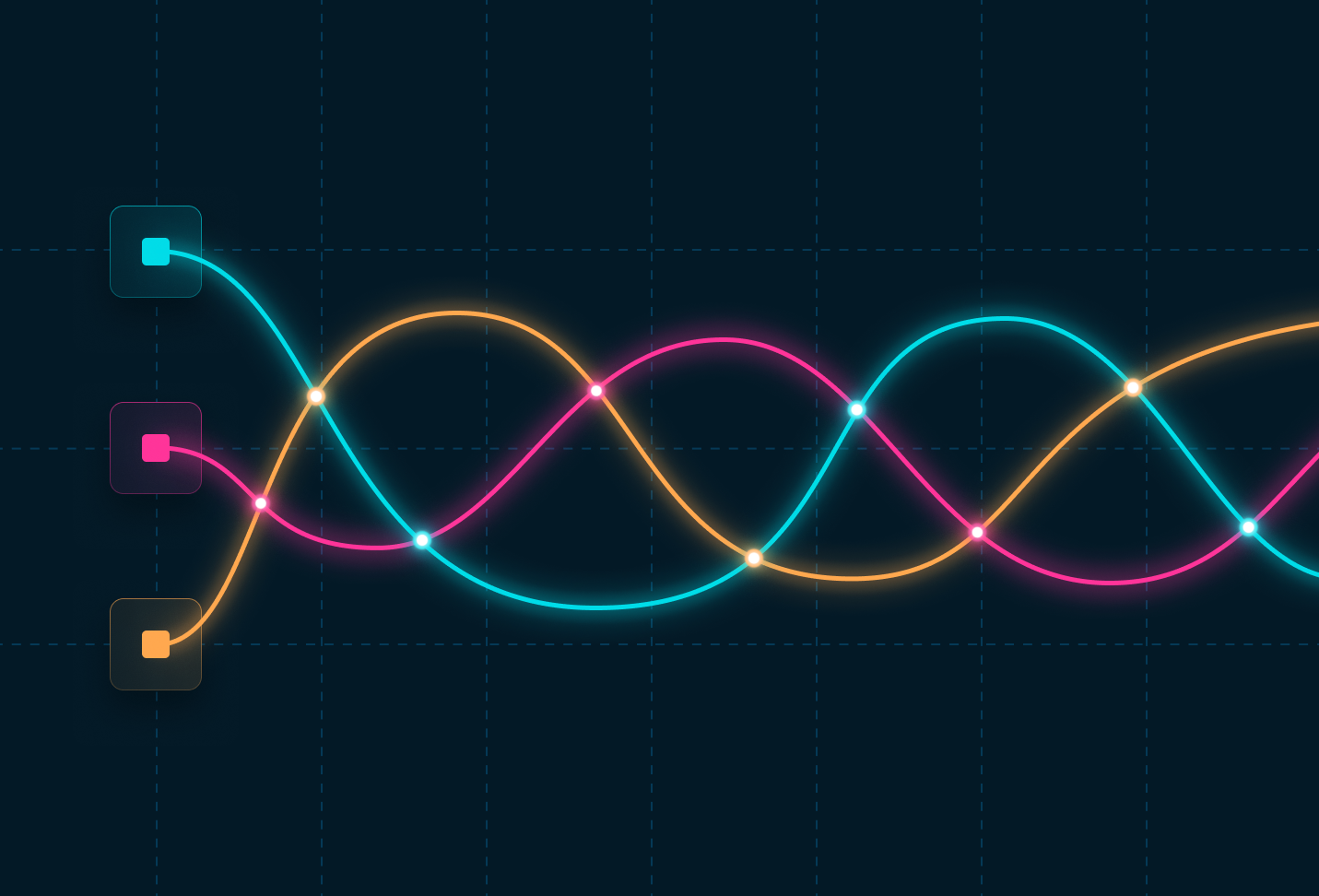
Connected risk is a state where every risk is linked to the controls that address it, every control is linked to live evidence from the systems that prove it, and all of it is tied to the business context it belongs to: the entities, products, geographies, and frameworks it touches.
In most programs today, each of those layers sits in its own tool or tab. A risk register here, a control library there, evidence in a shared drive, framework mappings in a spreadsheet. The relationships are documented once, by hand, and then they start aging immediately. A single risk, say unauthorized access to a regulated data store, should connect upward to a board-level risk category and downward to the specific access controls, the systems that enforce them, and the ISO 27001, PCI DSS, and HIPAA requirements those controls satisfy. In a connected program, that chain is live. In a disconnected one, it is a diagram someone drew in onboarding.
Why disconnected risk breaks the program
When the layers aren't connected, three things go wrong, and none of them announce themselves.
The first is reporting. Every status update becomes a manual reconstruction. Someone pulls the current control state, cross-references the risk register, checks which evidence is current, and assembles a view that is already stale by the time it reaches the room. The report describes a moment that has passed.
The second is exposure you can't see. A control fails or a system configuration changes, and nothing tells you which risks just went live. The map doesn't recalculate on its own, so the program keeps reporting coverage it no longer has. The cost of that blindness is measurable: supply-chain and third-party breaches take about 267 days on average to find and contain, the longest of any type, and average about $4.91 million, because the activity hides inside a trusted connection that nothing is actively watching (IBM Cost of a Data Breach 2025).
The third is duplicated work, and the numbers here are concrete. ISO 27001 and PCI DSS overlap by roughly 40 percent at the control level, and a single encryption-at-rest policy can satisfy ISO 27001 A.8.24, HIPAA 164.312(a)(2)(iv), and PCI DSS Requirement 3 at the same time. When the program isn't connected, that one control gets mapped and re-evidenced separately for each framework, by hand, and then again for every entity and product line. The same work, multiplied.
Put those three together and you reach the problem that actually matters to a leader: risk decisions get made on a snapshot rather than the current state. Sounds defensible, right? Not quite. A snapshot is fine until the day something changes between snapshots, which is every day.
What connected risk gives a decision-maker
For someone accountable for a program rather than a single control, connected risk changes what you can know and how fast you can know it.
You get a real-time view of risk posture instead of a quarterly snapshot. You get reporting that reflects the current state without a week of assembly behind it. When a control or a system changes, you can see immediately which risks and which frameworks are affected, so impact is visible rather than discovered later. You get one source of truth across frameworks, entities, and products, which means coverage is something you can prove rather than assert. It also surfaces concentration risk, the places where many critical systems, products, or vendors quietly depend on the same underlying provider, so a single point of failure becomes something leadership can see and act on before an outage forces the issue. The work shifts from preparing for periodic checks to managing exposure continuously.
Why most tools can't deliver it
Delivering connected risk comes down to foundations, and most tools were built on the wrong one.
Connections are only as trustworthy as the evidence beneath them. If the evidence is screenshots and manual uploads, the links between risk, control, and framework are decoration. They look connected on screen and mean nothing underneath.
Legacy workflow platforms store the relationships well enough, but they still rely on a person to keep every link current. With thousands of controls across multiple frameworks and entities, that upkeep never finishes, so the map drifts out of date between reviews. The "AI" added to many of these tools suggests what to connect and still leaves a human to do the connecting, which is why the connections never stay live for long.
Connected risk requires structured data pulled directly from source systems and kept current automatically. Without that foundation underneath, "connected" describes a diagram, not a state your program is actually in.
What it looks like in practice
Picture an enterprise running ISO 27001, PCI DSS, and HIPAA across several products and regions. An engineer changes a configuration in one cloud environment. In a connected program, that change flows through the chain on its own: it updates the control it affects, refreshes the evidence tied to that control, recalculates the risks and the framework requirements that depend on it, and surfaces an exception for a human to review if something now falls short.
Nobody assembled that. The team is reviewing the exception and deciding what to do about it, rather than spending the week gathering evidence and reconciling spreadsheets to find out the change happened at all.
This is the model behind agentic enterprise risk management: agents keep the register current as controls change status, so residual risk reflects the live state of your environment instead of the last quarterly review.
The real distinction
Knowing your risks and knowing your risk posture are not the same thing. The difference between them is whether risk, controls, evidence, and business context are connected and current, or sitting in separate places waiting for someone to line them up by hand.
The programs that can answer "are we covered, right now?" without scheduling a fire drill to find out are the ones where those connections hold by design.


.webp)
.svg)



