



Cybersecurity has become one of the hottest topics in any board meeting, driven by the exponential rise of sophisticated cyber attacks, now run with and by AI. What changed is not that boards care. It is the follow-up. They no longer want to hear that security is handled. They want to know how the program is actually performing, where the company is exposed, and whether any of it is getting better. Fair questions. The trouble is that security programs are complex and spanning many sub-domains with dozens of tools, teams, and standards. The data needed to accurately report on security KPIs and back answers with deep data is fragmented across dozens of security, IT, HR, engineering, and other tools and simply don't reflect the full picture.
We did not set out to build a security-KPI product. Our customers built the case for us. They came to us, one after another, with a version of the same request: you already have the credible infrastructure to pull trusted data out of a messy enterprise stack, so help me turn that into the security KPIs I take to my board. When serious people ask you the same question, you stop treating it as a feature request and start treating it as the job. And the more we looked, the clearer it got that this is not a problem only our customers have. Every security team that reports to a board has it.
The questions got harder, and the room got less technical.
Roughly 82% of CISOs now report to boards where fewer than a third have any real cyber expertise. So you are translating deeply technical work for people who need it in business language, under real scrutiny, with your credibility riding on every number. And the first follow-up is almost always the same three words: "are you sure?" That question is where a lot of security reporting quietly falls apart, and that is hard enough when the data sits still.
Attackers stopped waiting for your quarterly report.
Meanwhile the other side got faster. By one recent count, 90% of organizations experienced an agentic security incident in the past year, and the time from first foothold to real compromise has collapsed from days into minutes. I want to be careful here, because this is the part everyone over-promises: measuring your KPIs does not stop an attacker, and we are not pretending it does. But it changes the math on how often you can afford to look. It holds everyone accountable to measured performance every single day.
So we built it the way they asked. Starting with your KPIs, not ours.
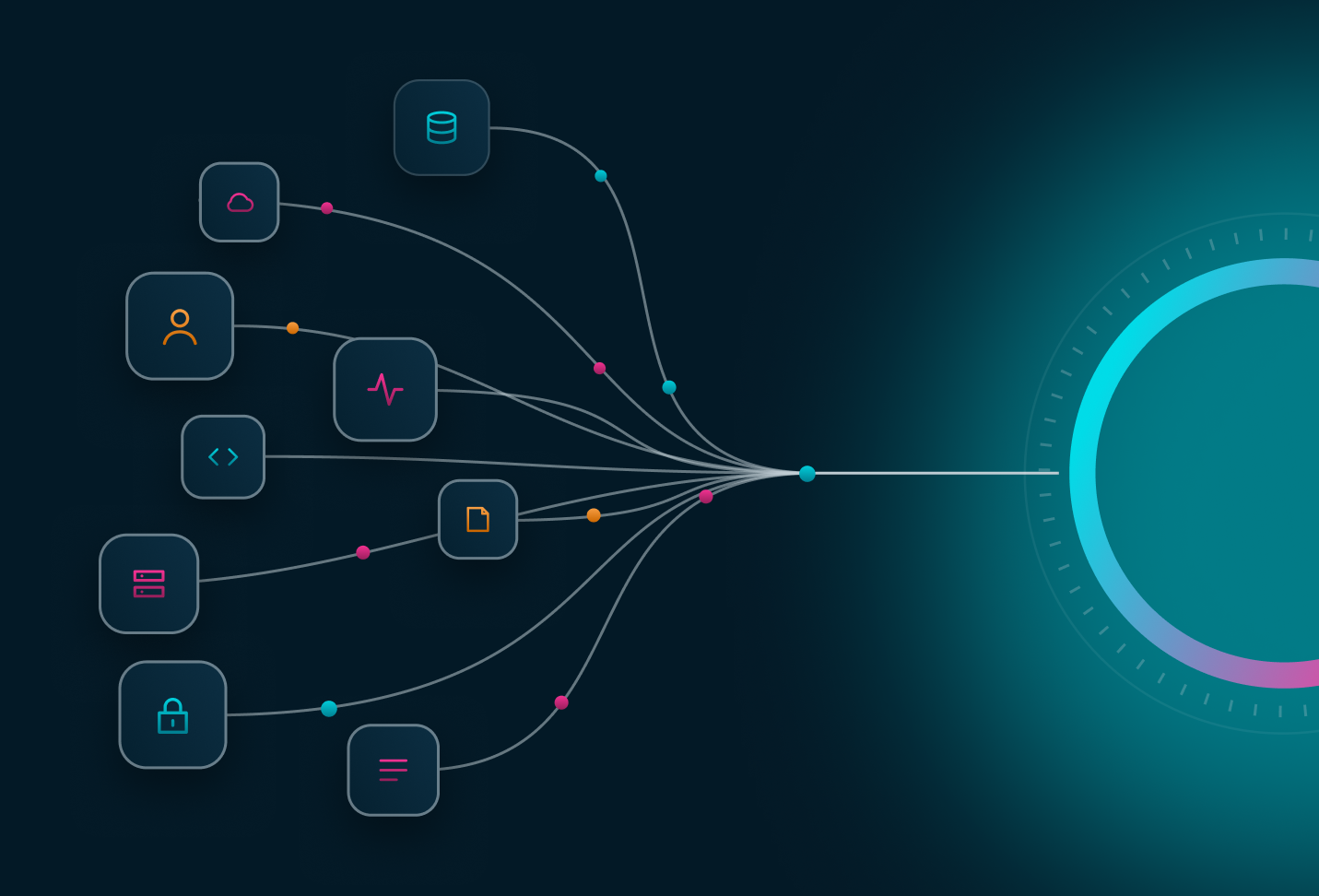
Every enterprise is different, so the metrics, targets, and thresholds are yours, not a vendor’s idea of what you should care about. You define them, with AI helping you shape and phrase them. You connect your security, IT, HR, and engineering systems through our data pipelines, and the KPIs are calculated continuously. When something moves, custom agents help you see which KPI needs attention and investigate why. And the last step is the one the board actually feels: technical performance, translated into a business conversation they can follow.
One line matters more than the rest. The AI helps you define, explain, and operate your KPIs. It never calculates the number. That distinction is the whole point, because a figure a model invented is a figure you cannot defend, and we would rather be boring and right.
A note if you’re new to us: Security KPIs is a native application on the Anecdotes data and AI platform: the same foundation that powers our other GRC solutions, which you’re welcome to explore. You can start with KPIs alone and grow from there.
You don’t have to choose which number to trust.
Here is the part I like most. You don’t have to pick the one metric that matters, or roll it out one quarter at a time. The whole program gets measured at once, continuously, from the systems you already run. So the next time the board asks how do you know, the answer is already on the screen, with the records behind it, not a spreadsheet three people rebuilt last week. Curious what that actually looks like before you talk to us? See how your board deck could look