
On-demand webinar: Watch now
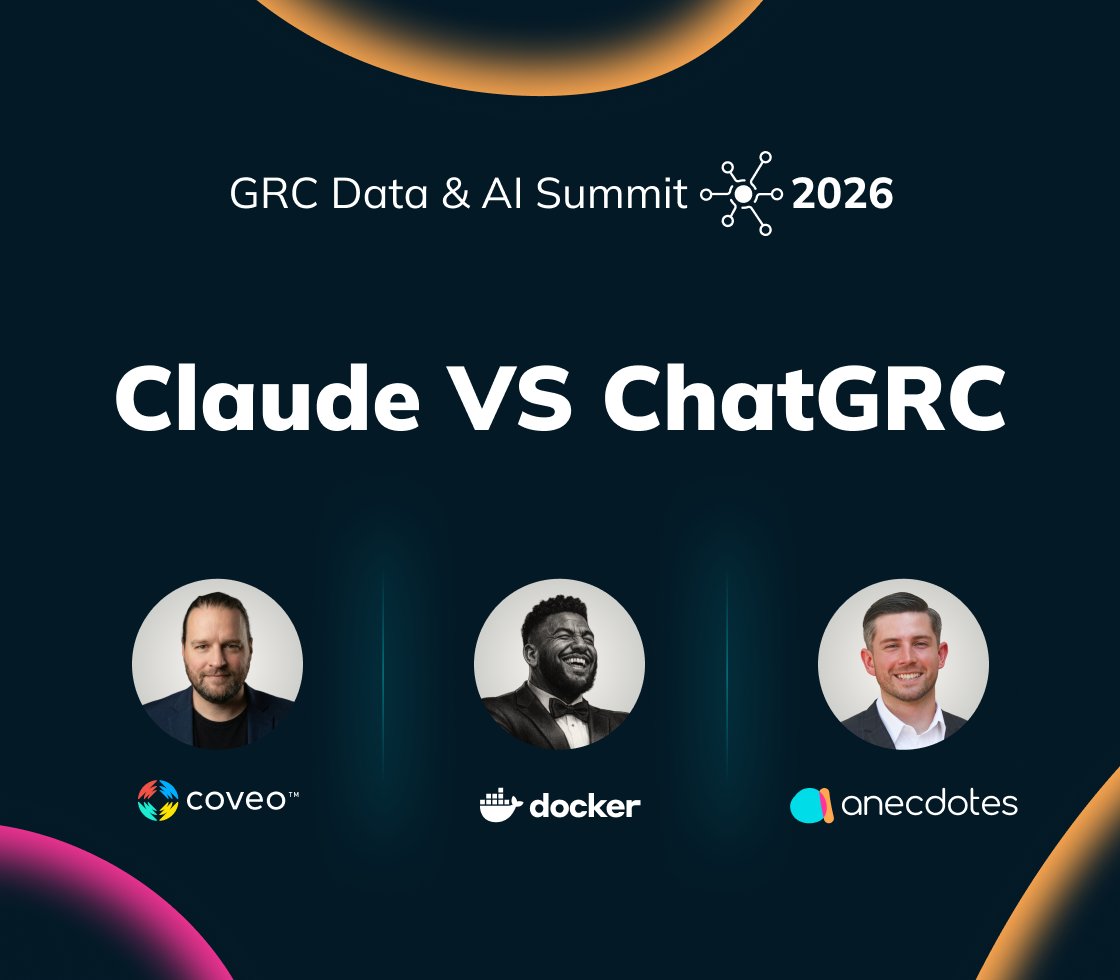
Live comparison + practitioner Q&A · Chad Fryer, Head of GRCP, Docker · Pierre-Paul Ferland, Senior Manager GRC, Coveo · Mateo Bravo, Customer Success Manager, Anecdotes
Mateo Bravo uses generic AI every day, and he gave it the best possible setup: the most capable configuration out of the box, pointed at what a newly hired GRC analyst realistically has, a Google Drive of evidence screenshots, policies, and spreadsheets. ChatGRC got the same information as structured, connected data in a clean instance. Same prompts, both sides, every answer verified by hand by GRC professionals. Watch the two use cases: terminated employees with active accounts across three identity providers, where the verified answer was five and one tool said eight. And an ISO 27001 control operating effectiveness report where the more polished output called a draft policy approved and described an API it never looked at. Chad Fryer and Pierre-Paul Ferland open with where each type genuinely wins, including where horizontal AI is the better tool.
What you'll take away
- Capability versus opinion: why GRC engineers and GRC analysts need different kinds of AI
- What a new framework request from sales costs in each model, from a two-week manual build down to the same afternoon
- The terminated-access result: the verified answer, the wrong answer, and exactly why the extra accounts appeared
- How a confident, well-formatted ISO 27001 report went wrong, including a draft policy called approved and an API that was never queried
- Verification debt, and how to tell whether you are paying it or the tool is
- What both practitioners built with AI and had to roll back
.svg)




